
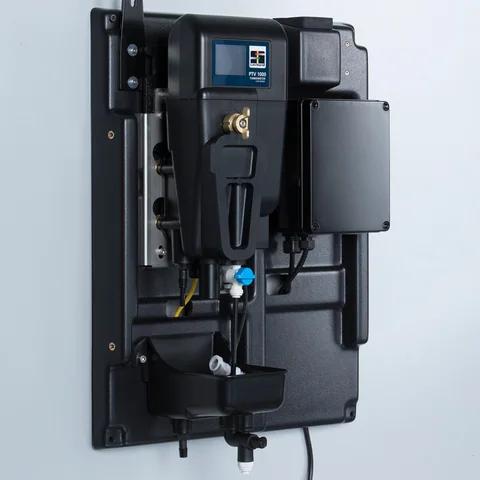
Water quality laboratory with a wall-mounted PTV 1000

What to check when turbidity shifts

Check the sample route, the analyser and recent plant events to work out what may have changed.

Read the guidance
All turbidity guides

Start with timing

Compare the time of the change with plant events, taking sample travel time into account.

Check flow and air

Look for interrupted flow, air ingress and recent changes to the sample or drain line. Record what you find before making adjustments.

Verify the instrument

Check the instrument against the applicable verification procedure and record the result alongside the trend.

Compare the same water at the same time

Where a grab sample is useful, match it to the process sample point and account for transit time. Record the reference instrument and optical method alongside the result.

Document the outcome

Keep the trend, operating events, verification result and any work on the sample line together. If the change recurs, that record helps the next operator pick up the investigation.
Explore related topics

Lovibond PTV 1000 instrument and mounting panel

Choosing infrared or white light

The optical method determines how the PTV 1000 illuminates the sample and which units to record.

Read the guide
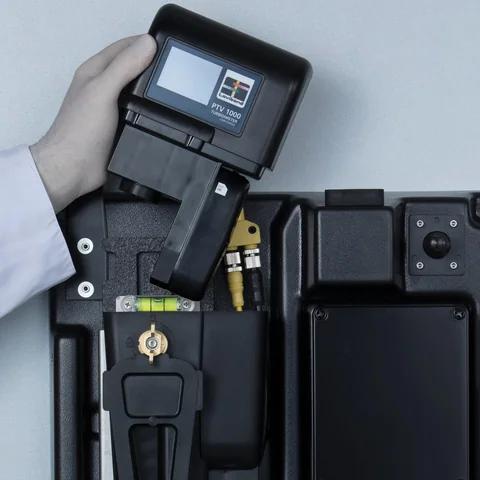
Operator working on the Lovibond PTV 1000 sensor head

Verification and calibration

Plan access for verification and calibration before deciding where to mount the instrument.

Read the guide

Planning a PTV 1000 installation?

Gather the sample, method and plant connection details for a discussion with PMA.

Prepare your enquiry

Start with the sample

Have the sampling point, expected turbidity and operating flow to hand.